We compared manufacturer specs, manuals and warranty terms. We have not hands-on tested these products yet. How we research
We may earn a commission when you buy through links on this page. As an Amazon Associate I earn from qualifying purchases. How we make money
A budget espresso machine can make good shots if it controls temperature, builds enough pressure and gives you a decent steam wand. This page is for shoppers with a firm spending limit who want to know what to protect and what to skip. Remember to leave room in the budget for a grinder.
We compared 6 espresso machines and picked 6.
Our picks at a glance
1
★ Start hereBest overallBreville BambinoHeats in about three seconds and pulls properly extracted shots in a small footprint.
$299.95Price as of Nov 26, 2026, 4:20 PM ET. Details
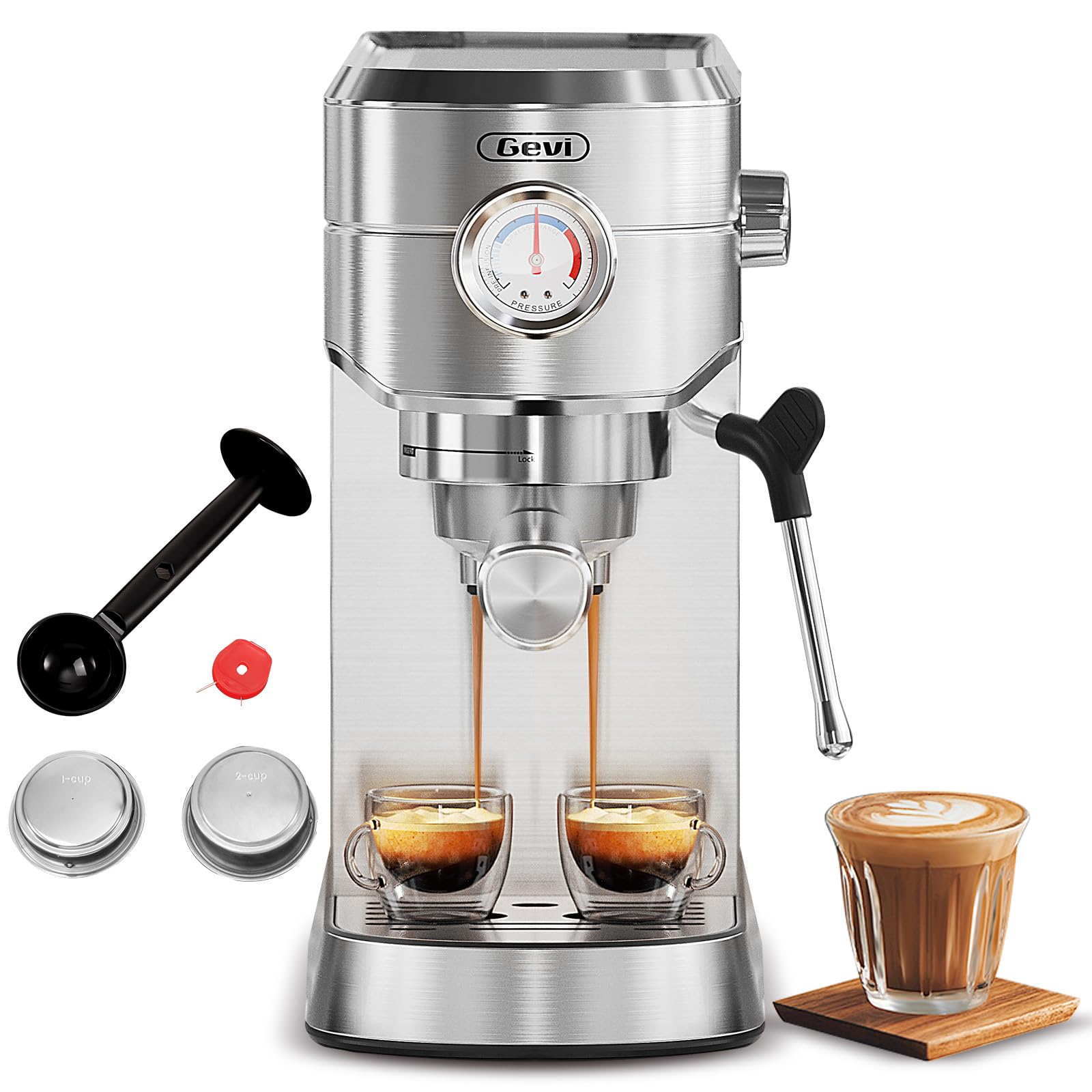
Best slim stainlessGevi 20 Bar Compact Espresso MachineA 5.5-inch-wide stainless espresso machine for small kitchens, with pre-infusion, a pressure gauge and a steam wand.
$112.66Price as of Nov 25, 2026, 7:35 PM ET. Details
A lower budget means choosing carefully what to give up. Our beginner espresso guide covers the basics, and the guide to making espresso at home explains the numbers to aim for. Read the grind size chart before you decide how much to spend on the grinder.
Temperature control
The traditional Italian standard names brew water at the group of 90 to 96°C (COMITCAF). Many budget machines do not let you set a temperature, so check the temperature control column and the manual. Your manual should tell you how to set the temperature if the machine allows it.
Steam power and wand
Compare the steam wand type. Manual wands give the most control and take practice. Automatic frothing arms are easier but offer less control. If milk drinks are your main use, a separate frother can also close the gap. Check whether the wand is a manual one or an automatic arm before you decide if you will buy a separate frother.
Pressurized or non-pressurized baskets
A pressurized basket tolerates a coarser or less consistent grind, which suits pre-ground coffee or a basic grinder. A non-pressurized basket needs a fine, consistent burr grind to extract well. Pick the basket that matches the grinder you actually own. Our guide to the grind size chart shows where espresso sits.
Build and warranty
Look at the materials in the portafilter, group head and housing, and compare the warranty column. Read what the warranty covers and for how long, and keep your receipt.
Budget left for a grinder
Espresso needs a fine grind, "like table salt" (NCA). A machine paired with a weak grinder will be hard to dial in. Plan your budget across both, and look at our espresso grinder guide or a machine with a built-in grinder before you spend.
Tips for using your espresso machine
Check the current price on Amazon before you buy, since prices there move often.
Hold some budget back for a grinder, and use our grind size chart to see how fine espresso needs to be.
Compare the warranty column on every pick, since a budget machine gets used often.
The traditional Italian specification asks for water at the group between 90 and 96°C and at least 8 bar of pressure (COMITCAF). Use that as a yardstick when you read the temperature control and pump pressure details in the table.
If your tap water is hard, scale builds up when it is heated. USGS puts hard water at 121 to 180 mg/L and very hard water above 180 (USGS), so a descale alert is worth having.
FAQ
What should a budget machine still do well?
The traditional Italian standard asks for brew water at the group of 90 to 96°C and pressure of at least 8 bar (COMITCAF). Use that as a benchmark when you read a listing.
Should I choose a pressurized or non-pressurized basket?
A pressurized basket forgives an uneven grind, which suits pre-ground coffee or a basic grinder. A non-pressurized basket needs a fine, consistent burr grind to give a good result.
Where do I find the current price?
On Amazon. Prices there move often, so check the current price on Amazon before you buy; the button on each pick opens its listing.
Does hard water matter for an espresso machine?
Yes. Heating hard water forms scale. USGS defines hard water as 121 to 180 mg/L and very hard water as over 180 mg/L (USGS), so a descale routine is part of owning any machine.
Golden Ratio: 1-2 tablespoons of ground coffee per 6 oz of water.
Drip: medium grind, about 5 minutes of contact.
Pour-over: 1:13 to 1:16 by weight, medium grind, water at 93 ± 3°C, 2-4 minutes.
French press: 1:10 to 1:16, coarse grind, about 4 minutes.
bloom-and-burr.com
Get the Brew Ratio Cheat Sheet
A printable one-page sheet with the ratio, grind, time and temperature for drip, pour-over, French press, cold brew and espresso. Free, and sized for the cabinet door.