We compared manufacturer specs, manuals and warranty terms. We have not hands-on tested these products yet. How we research
We may earn a commission when you buy through links on this page. As an Amazon Associate I earn from qualifying purchases. How we make money
A cold brew maker holds coarse coffee and water while they steep, then separates the grounds from the finished coffee. The decisions that matter are how much it makes, what filters the grounds and whether it fits in your fridge. This page is for anyone who wants a repeatable batch without improvising with jars and strainers.
We compared 8 cold brew makers and picked 8.
Our picks at a glance
1
★ Start hereBest overallTakeya Cold Brew Maker (1 Qt)Fits in a fridge door with an airtight lid, and makes enough for several days.
$24.98Price as of Nov 25, 2026, 2:30 AM ET. Details
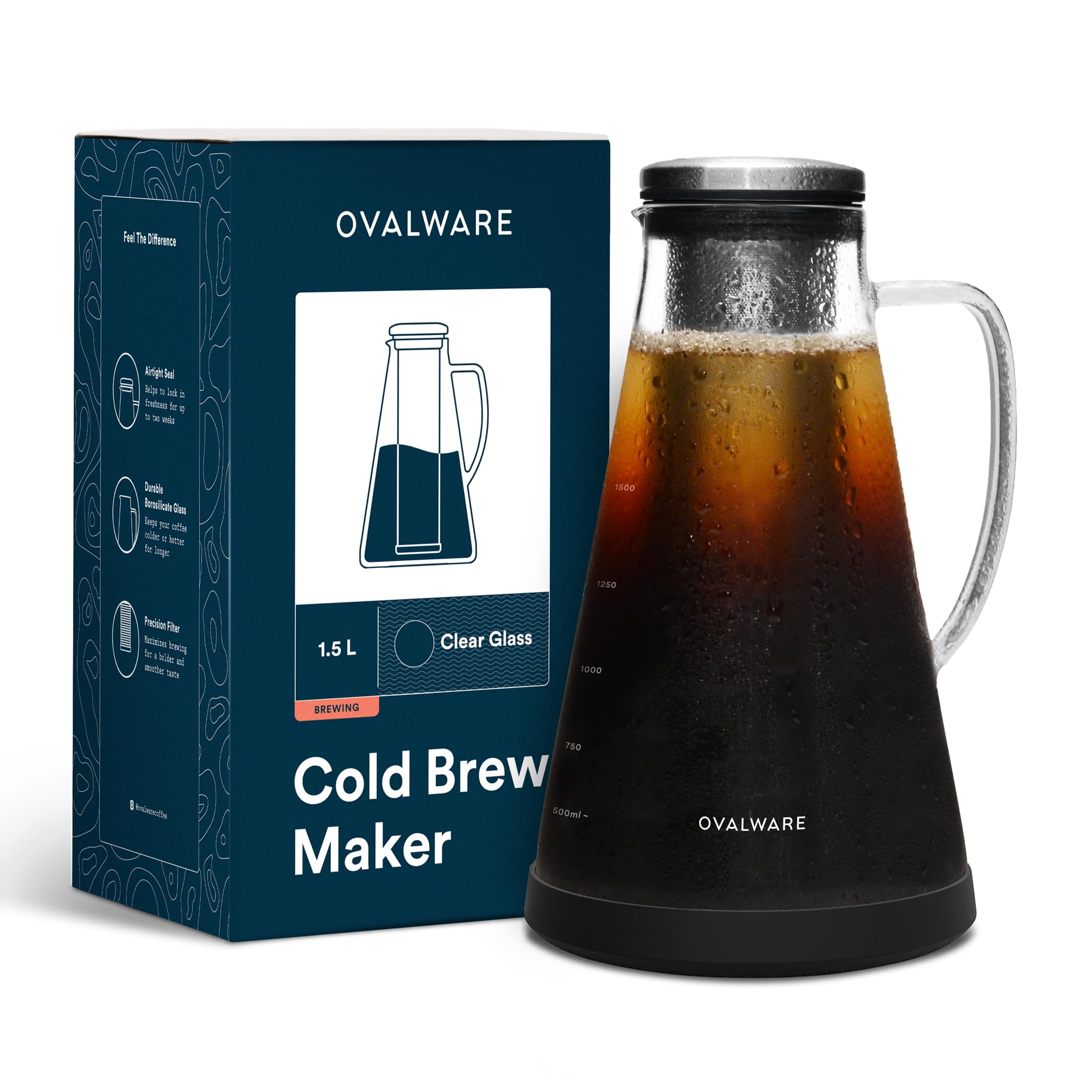
Best coffee-and-tea brewerOVALWARE RJ3 Cold Brew Maker 1.5LA 51 oz glass pitcher with a fine stainless filter and airtight lid that brews cold brew or loose-leaf tea, and fits a fridge shelf.
$37.59Price as of Nov 25, 2026, 7:02 PM ET. Details
Best plunger-style brewerBodum Bean 51 oz Cold Brew MakerA press-style cold brewer for people who like plunging: a 51 oz carafe, a sealing lid for steeping and a plunger lid for serving.
$14.78Price as of Nov 25, 2026, 7:33 PM ET. Details
Best easy-grip pitcherPrimula Burke Deluxe Cold Brew Maker 1.6 qtA 52 oz glass cold brew pitcher with a comfort-grip handle and removable mesh filter, sized to fit most fridge doors.
$17.70Price as of Nov 25, 2026, 7:06 PM ET. Details
Cold brew is easy to make and easy to store badly. Our how-to guide covers the recipe and safe storage, our burr grinder guide helps with the coarse grind, and our coffee-to-water ratio chart lists the cold brew ratio next to the other methods.
Capacity
Capacity is listed in quarts. A large batch means fewer brewing sessions, but a bigger footprint. NCA gives a ratio of 1 g of coffee to 4 to 5 g of water for cold brew (NCA), so use it to work out how much coffee a full batch needs. Work backward from the ratio: decide how much cold brew you drink in a week, then choose a capacity that makes that amount without leaving a half-empty pitcher.
Filter type
Fine mesh filters are reusable and let more fine particles through. Paper filters catch more, but you buy them over and over. Check the filter type column and what the maker says about replacements. Whichever filter you choose, a coarse grind is the starting point, so match the filter to a grinder that can produce one. Because you will rinse the filter often, a design with fewer parts is easier to clean.
Fits the fridge
Keep finished cold brew in a refrigerator at 40°F or below (FDA). Check the dimensions and the fits fridge door column against your fridge shelf and door before you buy. Some pitchers are tall and thin, and others are short and wide, so measure the shelf before you commit.
Material
Glass does not hold flavors and is easy to see through, but it can break. Plastic is light and tough. Check the material column and the manufacturer's care notes, and watch for BPA-free claims that are listed rather than assumed. Whatever the material, look for lids and handles that suit the way you lift and pour a full pitcher.
Easy cleaning and airtight lid
Look for wide openings and removable parts, and check the dishwasher-safe column. An airtight lid keeps the coffee from picking up fridge smells. Our cold brew guide covers the grind and steep time.
Tips for using your cold brew maker
Grind coarse; NCA lists coarse as the grind for cold brew (NCA).
Refrigerate finished cold brew in a fridge at 40°F or below (FDA).
If fridge space is tight, check the dimensions column against the shelf you plan to use before choosing a larger capacity.
Label the batch with the day you started it, so you remember how long it has been in the fridge.
NCA gives cold brew a ratio of 1 g of coffee to 4 to 5 g of water and a coarse grind (NCA). Compare the capacity column with the batch you plan to make.
Our cold brew guide covers the steps. Once it is made, keep it in a refrigerator at 40°F or below (FDA), so check that the pitcher fits your fridge.
FAQ
What coffee-to-water ratio should I use?
NCA gives 1 g of coffee to 4 to 5 g of water for cold brew, written 1:4 to 1:5 (NCA). Weigh both so the result is repeatable.
How long does cold brew need to steep?
About 12 hours is typical. NCA describes a wide range, from a few minutes up to 12 to 18 hours or more (NCA), so use the maker's directions as your starting point and adjust to taste.
Should I steep it in the fridge or on the counter?
NCA allows either for steeping (NCA). Once it is finished, keep the cold brew in a refrigerator at 40°F or below (FDA).
What grind should I use?
A coarse grind, according to NCA (NCA). A burr grinder helps you get an even coarse grind, and our grind size chart shows where it sits.
Ratio, grind, time and temperature for five brew methods, in one chart.
Bloom & Burr
The Bloom & Burr Brew Ratio Cheat Sheet
Golden Ratio: 1-2 tablespoons of ground coffee per 6 oz of water.
Drip: medium grind, about 5 minutes of contact.
Pour-over: 1:13 to 1:16 by weight, medium grind, water at 93 ± 3°C, 2-4 minutes.
French press: 1:10 to 1:16, coarse grind, about 4 minutes.
bloom-and-burr.com
Get the Brew Ratio Cheat Sheet
A printable one-page sheet with the ratio, grind, time and temperature for drip, pour-over, French press, cold brew and espresso. Free, and sized for the cabinet door.